
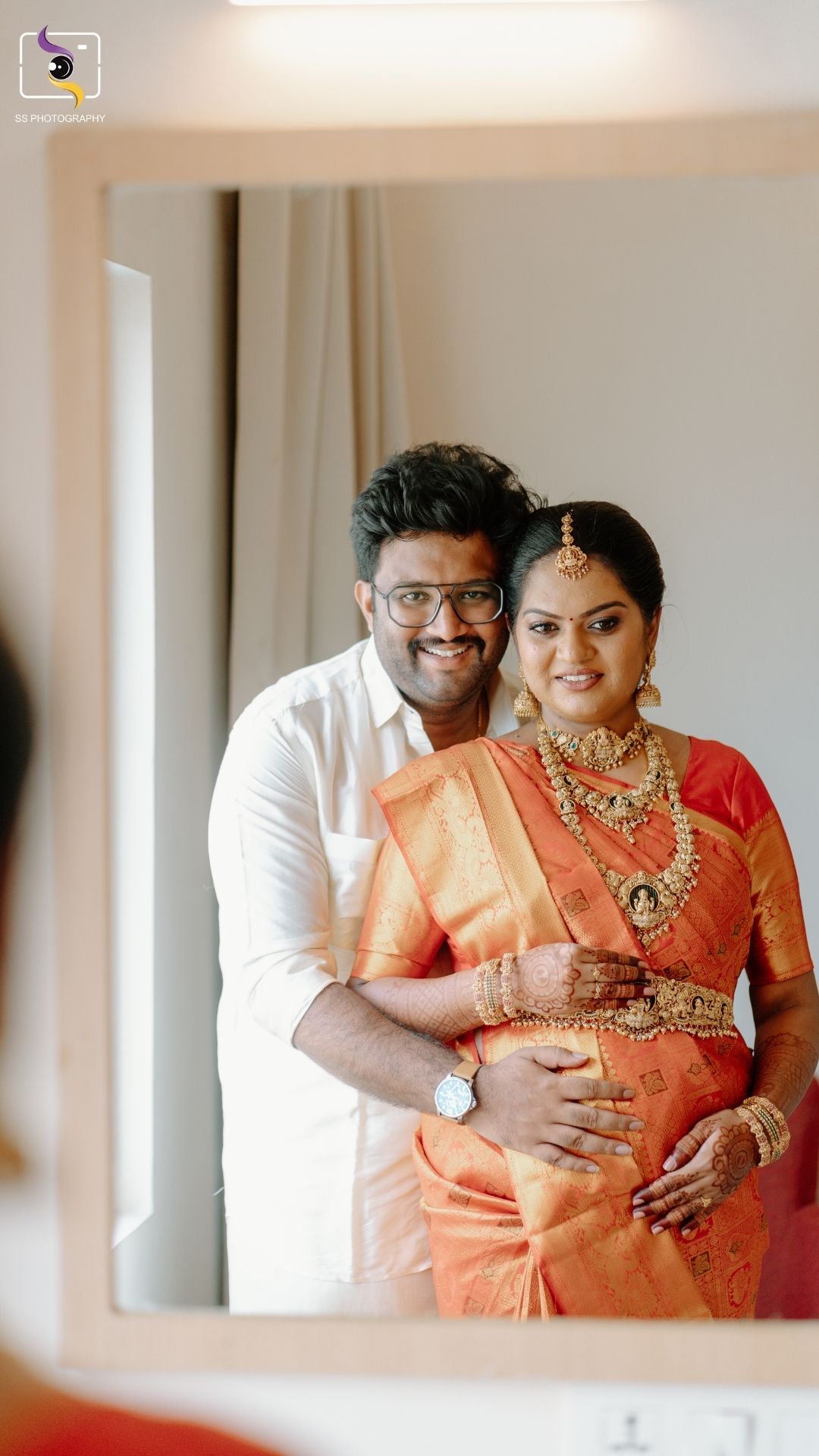
Picture this: Your sister is glowing in her sixth month of pregnancy, surrounded by family members adorning her wrists with colorful bangles. The laughter echoes through the hall, grandmothers share blessings, and children run around excitedly. This beautiful Tamil tradition deserves to be captured perfectly, yet many families struggle with getting photos that truly reflect the emotion and significance of their valaikappu ceremony.
If you’re reading this, chances are you’re either planning a valaikappu function or you’ve been tasked with organizing one. Perhaps you’ve scrolled through countless wedding photography portfolios wondering, “Will these photographers understand the cultural significance of our ceremony?” or “How do we ensure we get authentic, natural photos without making our guests uncomfortable?”
You’re not alone. Every year, thousands of families in Tamil Nadu and across the globe celebrate this sacred baby shower ceremony, and the demand for photographers who truly understand valaikappu traditions has never been higher. The challenge isn’t just finding someone with a good camera—it’s finding someone who knows when to capture the elder’s blessing, how to frame the bangle ceremony, and which candid moments will become your most treasured memories.
Understanding the Cultural Significance Behind Every Frame
Before we dive into the technicalities of valaikappu function photos, let’s talk about why these images matter so much. The valaikappu ceremony isn’t just another event on your calendar—it’s a profound celebration marking the impending arrival of new life. When you look at these photos decades from now, you’ll want to remember the warmth of your mother’s embrace, the excitement in your partner’s eyes, and the blessings showered upon you by your entire family.
Traditional valaikappu ceremonies typically occur during the seventh or ninth month of pregnancy, always on an auspicious odd-numbered month. The ritual involves adorning the expectant mother with glass bangles, typically green and red, symbolizing prosperity and fertility. The sound of these bangles is believed to be the baby’s first music, and capturing this moment requires a photographer who understands not just the “how” but the “why.”
The Pain Points Nobody Talks About
Let me share something most photography websites won’t tell you: organizing valaikappu function photos is genuinely stressful. You’re dealing with a pregnant woman who might be uncomfortable in traditional attire for hours, elderly relatives who aren’t comfortable with cameras in their faces, and a tight timeline because ceremonies often need to conclude before sunset according to traditional timing.
Then there’s the venue lighting issue. Many valaikappu functions happen in homes or traditional halls with challenging lighting conditions. You might have harsh fluorescent lights overhead, beautiful natural light streaming through windows, and decorative lamps creating color casts—all in the same room. Your average photographer might deliver images where the expectant mother looks washed out or where the beautiful decorations are lost in shadows.
Another common frustration? Missing the crucial moments. The exact second when seven married women place bangles on the mother-to-be’s wrists, the emotional reaction when she first sees her saree or jewelry, the candid laughter during the games—these happen in seconds, and if your photographer is busy adjusting settings or checking their phone, they’re gone forever.
Planning Your Valaikappu Photography: What Actually Works
Let’s get practical. Based on hundreds of successful valaikappu ceremonies, here’s what separates mediocre photos from ones that make you cry happy tears years later.
Timeline Management: Your Secret Weapon
Start by creating a realistic timeline for your ceremony. A typical valaikappu function runs 3-4 hours, but the photographable moments are concentrated in specific segments. Your photographer needs to arrive at least an hour before the main ceremony begins to capture:
The preparation phase: These are golden moments—the expectant mother getting ready, trying on jewelry, the quiet anticipation before the celebration begins. Some families skip photography during this time thinking it’s not important, but trust me, these intimate shots often become the most cherished ones. The natural emotions, the helping hands of sisters and friends, the careful draping of the saree—these tell a story that formal ceremony photos simply cannot.
The decoration and setup: Your family probably spent days planning the decoration. The flower arrangements, the traditional brass lamps, the kolam at the entrance, the banana leaf decorations—these deserve documentation. Many families realize only after the event that they have no good photos of their beautiful setup.
Guest arrival and interactions: The joy of seeing relatives you haven’t met in months, the excitement of friends arriving with gifts, the chaos of children running around—these candid moments create the emotional fabric of your album.
When it comes to valaikappu poses for baby shower, planning makes all the difference. You don’t want stiff, uncomfortable poses; you want natural arrangements that feel authentic to your family’s style.
The Art of Authentic Valaikappu Photography
Here’s something fascinating: the best valaikappu function photos are rarely the ones where everyone’s looking at the camera. They’re the ones where your grandmother is whispering blessings in your ear, where your partner is looking at you with complete adoration during the ceremony, where your niece is trying on the bangles when she thinks nobody’s watching.
Ceremony Coverage: What Not to Miss
The bangle ceremony itself is the heart of your event, and it requires a photographer who understands the sequence and significance. The expectant mother typically sits on a decorated chair or pattai (mat), and seven married women take turns placing bangles on her wrists. Each woman represents a blessing, and capturing their expressions, the mother’s reactions, and the overall atmosphere requires both technical skill and cultural awareness.
Professional valaikappu photography should document the entire ritual sequence while remaining unobtrusive. Nobody wants a photographer constantly saying “look here” or blocking guests’ views during the ceremony.
Lighting Challenges and Solutions
Let’s address the elephant in the room: lighting. Most valaikappu functions happen in spaces that weren’t designed for photography. The solution isn’t more flash (which often makes subjects look flat and washes out the vibrant colors of sarees and decorations). Experienced photographers know how to work with available light, perhaps supplementing with subtle off-camera lighting that maintains the warm, intimate atmosphere of your celebration.
The color of the expectant mother’s saree, the golden glow of traditional lamps, the rich hues of flower decorations—these should pop in your photos, not disappear under harsh lighting. When reviewing valaikappu photoshoot examples from potential photographers, pay attention to how they’ve handled color and light.
Couple Photography: A Modern Addition to Tradition
Increasingly, families are incorporating couple photos into their valaikappu celebrations. After all, this is a moment both parents should cherish. The challenge is finding time for valaikappu couple poses without disrupting the ceremony flow or exhausting the expectant mother.
The best approach? Schedule a 15-20 minute couple session either just before the ceremony begins or immediately after the main bangle ritual. Choose a quiet corner of the venue or a nearby location with good natural light. These photos should feel relaxed and intimate—think gentle hand placement on the baby bump, loving glances, shared laughter. Nothing forced or overly stylized.
Some couples worry that asking for individual photos is selfish or takes away from the ceremony’s focus. But here’s the truth: in a few months, you’ll be consumed with diaper changes and sleepless nights. These photos from your valaikappu—just the two of you, anticipating your baby’s arrival—will become incredibly precious.
Group Photos That Don’t Feel Like a School Picture Day
We need to talk about group photos because this is where many valaikappu photography sessions go wrong. Nobody enjoys standing in rigid rows, forcing smiles for five minutes while the photographer struggles with composition. Yet family photos are important—this might be the last time in months that everyone’s together in one place.
The solution? Think in terms of natural groupings rather than one massive photo. Start with immediate family, then grandparents with the expectant mother, then siblings, then close friends. Keep each grouping to 3-5 minutes maximum. Use natural poses—seated arrangements, people standing at different heights, interactive poses rather than everyone staring at the camera.
For larger gatherings, consider a candid approach where the photographer captures natural interactions during the ceremony rather than staging a formal group shot. Some of the best family photos happen organically when everyone’s engaged in conversation or sharing a laugh.
Details That Tell Your Story
Here’s what separates good valaikappu function photos from extraordinary ones: attention to details. A close-up of the intricate mehndi design on the mother’s hands, the texture of the silk saree, the delicate gold jewelry, the colorful glass bangles catching light, the traditional kumkum and turmeric in brass containers, the carefully arranged flowers, the blessed coconut decorated with turmeric and vermillion.
These detail shots add depth to your album and preserve memories of elements you spent weeks selecting. Twenty years from now, you might not remember which specific saree you wore, but a beautiful close-up will bring that memory flooding back.
Food Photography: Yes, It Matters
Tamil ceremonies and food are inseparable. The traditional sweets, the carefully arranged banana leaf meals, the variety of dishes prepared by family members—these deserve documentation too. Not because you want to show off (though the spread is usually impressive), but because food is part of your family’s story.
A skilled photographer captures the food presentation artistically—the colors, the arrangement, the traditional serving style. But more importantly, they capture people enjoying the food, elders insisting you try their special dish, children sneaking extra sweets, the communal joy of sharing a meal.
Managing Expectations: The Realistic Timeline
Let’s talk about post-ceremony photo delivery because this causes more disappointment than almost anything else. You’ve had your beautiful valaikappu, and now you’re eagerly waiting for photos. When should you realistically expect them?
Professional photographers typically need 2-4 weeks for delivery. This includes culling (selecting the best shots from thousands of images), editing for color and exposure, retouching where necessary, and organizing the final gallery. Rushing this process results in inconsistent quality and missed opportunities for perfection.
Some photographers offer a “sneak peek” of 10-15 edited images within 48 hours, which is perfect for sharing on social media or sending to relatives who couldn’t attend. The full gallery comes later, but at least you have something to hold you over.
Choosing the Right Photographer: Beyond the Portfolio
When you’re evaluating photographers for your valaikappu, the portfolio is obviously important. But here are some questions that matter more than you might think:
Have they photographed valaikappu ceremonies before? Cultural familiarity makes a massive difference. A photographer who has covered multiple valaikappu functions knows which moments matter, understands the ceremony flow, and can anticipate key events.
How do they handle difficult lighting? Ask to see photos from ceremonies in challenging lighting conditions. If all their best work is outdoor or in professional studios, they might struggle with your venue.
What’s their backup equipment policy? Memory cards corrupt, cameras fail, batteries die. Professional photographers carry backup equipment for everything critical. This isn’t optional—it’s essential.
How do they interact with guests? You want someone who’s friendly but professional, who can gently direct people for group photos without being bossy, and who makes your elderly relatives comfortable rather than intimidated.
For comprehensive coverage that truly understands Tamil traditions, photographers specializing in cultural ceremonies bring invaluable expertise. You can explore more about baby shower photography approaches to understand what comprehensive coverage should include.
The Investment Question: What Should You Budget?
Photography costs for valaikappu functions vary widely based on location, photographer experience, coverage duration, and deliverables. In cities like Chennai, Trichy, or Coimbatore, you might find packages ranging from ₹15,000 to ₹75,000 or more.
But here’s what you’re actually paying for: expertise, equipment, time (including travel, shooting, and extensive editing), backup systems, insurance, and years of experience knowing exactly which moments to capture. The cheapest option is rarely the best value, but the most expensive isn’t automatically the best either.
Consider what’s included: How many hours of coverage? How many edited photos? Are prints included? Do you get digital files? What about an album? Is there a second photographer for simultaneous coverage? Understanding exactly what you’re getting helps you compare packages fairly.
Making Everyone Comfortable During Photography
One of the biggest challenges with valaikappu function photos is that not everyone enjoys being photographed. Your grandmother might be camera-shy, your brother might hate posing, your friends might feel awkward about formal photos. A skilled photographer knows how to work with different personality types.
For reluctant subjects, candid photography is your friend. Instead of asking them to pose, the photographer captures them naturally engaged in conversation or activities. The resulting images often feel more authentic anyway.
For the expectant mother, comfort is paramount. She shouldn’t have to stand for extended periods or contort into uncomfortable positions for photos. Professional valaikappu poses prioritize comfort while still creating beautiful images—mostly seated or gently standing poses, with props for support when needed.
Special Considerations for Modern Valaikappu Ceremonies
Traditional valaikappu ceremonies are evolving. Many families now incorporate contemporary elements alongside traditional rituals. You might have a photo booth with props, themed decorations, or a cake-cutting ceremony. Your photography should document both the traditional and modern aspects seamlessly.
Some families are opting for destination valaikappu celebrations—perhaps at a family home in a village or a scenic resort. These locations offer beautiful backdrops but present logistical challenges for photographers. Discussing these details well in advance ensures your photographer comes prepared with appropriate equipment and backup plans.
Increasingly, families with members scattered globally are livestreaming portions of their valaikappu so distant relatives can participate virtually. Your photographer might need to coordinate with videographers or technical teams to ensure quality coverage while staying out of each other’s way.
Post-Production: Where Good Photos Become Great
Photography doesn’t end when the ceremony concludes. The editing process is where raw images transform into the polished photos you’ll treasure forever. Professional editing includes:
Color correction: Ensuring skin tones look natural, saree colors are vibrant, and the overall color palette is consistent across all images.
Exposure adjustments: Brightening shadowy areas without losing detail, toning down overly bright spots, ensuring every photo is properly exposed.
Retouching: Removing minor distractions, softening blemishes while maintaining natural skin texture, ensuring the expectant mother looks her radiant best without looking overly processed.
Artistic enhancement: Adding warmth or coolness to match the ceremony’s mood, slight vignetting to draw focus to subjects, and ensuring each photo tells its part of your story effectively.
Over-editing is a real concern. You want photos that look polished but still authentic. If everyone’s skin looks plastic-smooth or colors are unrealistically vibrant, the editing has gone too far.
Album Design: Your Story in Physical Form
While digital galleries are convenient for sharing, there’s something special about a physical album. Holding your valaikappu memories in your hands, flipping through pages, sharing with your child when they’re older—it’s an experience screens can’t replicate.
Quality albums use premium materials that last decades: thick pages that won’t tear, professional binding that won’t fall apart, and high-quality printing that won’t fade. The design should flow naturally, telling your ceremony’s story from preparation through celebration to conclusion.
Some families create two albums—a large parent album with extensive coverage and smaller versions for grandparents. Others opt for a single comprehensive album and share digital copies with extended family.
Real Talk: Common Regrets and How to Avoid Them
Having covered numerous valaikappu ceremonies, here are the most common regrets families express:
“We didn’t get enough photos of the expectant mother with individual family members.” Solution: Create a list of must-have combinations and share it with your photographer ahead of time.
“The photos don’t capture the atmosphere and emotions we remember.” Solution: Prioritize photographers who excel at candid, photojournalistic coverage, not just posed portraits.
“We wish we had photos of our venue and decorations before guests arrived.” Solution: Schedule your photographer to arrive early for empty-venue shots.
“The expectant mother looks uncomfortable or tired in most photos.” Solution: Plan adequate rest breaks, schedule photos during times when she’s most energetic, and work with a photographer who prioritizes comfort.
“We have 500 photos but most look similar.” Solution: Discuss variety in advance—mix of wide shots, close-ups, details, candids, and portraits.
Integrating Photos Into Your Baby’s Future Story
Your valaikappu photos aren’t just about preserving the past—they’re part of your child’s future. Imagine showing your ten-year-old the photos from the ceremony celebrating their arrival, explaining the traditions, pointing out relatives they know and some they’ve never met.
These images become teaching tools for cultural heritage, visual proof of how much they were loved even before birth, and tangible connections to family history. That’s why getting comprehensive valakappu photography matters—you’re not just documenting an event; you’re creating legacy content.
Some families create annual tradition of looking through these photos on the child’s birthday, sharing stories about the ceremony, and helping them understand their cultural roots. Others incorporate selections into baby books or first birthday presentations.
Weather and Seasonal Considerations
If your valaikappu includes outdoor elements—perhaps photographs in a garden or courtyard—weather becomes a crucial factor. In Tamil Nadu, timing matters significantly. Summer heat can be oppressive, monsoon rains unpredictable, and even winter months can bring surprises.
Have a backup plan for outdoor photography sessions. Can you shift to a covered area? Is there an indoor location with good natural light? Professional photographers scout locations beforehand and come prepared with weather contingencies.
Golden hour (the hour after sunrise or before sunset) offers beautiful natural light but requires careful timing with ceremony schedules. Many traditional families prefer ceremonies during specific astrologically auspicious times, which might not align perfectly with optimal photography lighting. Experienced photographers work within these constraints, adapting their techniques to available conditions.
Final Preparations: The Week Before Your Valaikappu
As your ceremony approaches, touch base with your photographer to confirm all details: arrival time, venue address and parking information, key contact person on the day, must-have shot list, any special requests or concerns, and payment and delivery timeline finalization.
Share your ceremony schedule so the photographer understands the flow and can plan their coverage accordingly. If there are family politics or sensitivities to navigate (estranged relatives who shouldn’t appear together in photos, surprise elements you want captured, etc.), brief your photographer privately.
Prepare the expectant mother for the photography timeline so she can pace herself, rest when needed, and remain comfortable throughout the day. Her well-being is more important than any photograph.
The Day Of: Making Everything Flow Smoothly
On your valaikappu day, designate someone (not the expectant parents) as the photographer’s liaison—someone who knows all the family members, understands the ceremony flow, and can help coordinate group photos. This person can point out important guests the photographer might not know to prioritize, help gather people for group photos quickly, and run interference if the photographer needs space or time.
Trust your photographer’s expertise. If they suggest a different angle or timing for certain shots, there’s usually a good reason based on lighting, background, or composition. Micromanaging on the day leads to stress and rarely produces better results than simply trusting the professional you hired.
Beyond the Ceremony: Maternity and Newborn Photography
Many families who invest in professional valaikappu photography extend their relationship with the photographer through maternity sessions and newborn photography. There’s beautiful continuity in having the same artist document your journey from pregnancy announcement through baby’s arrival.
Consider discussing packages that might include pre-valaikappu maternity photos and post-delivery newborn sessions. Some photographers offer bundled rates that make comprehensive coverage more affordable. For ideas on comprehensive baby-related photography coverage, check out resources on baby shower photoshoot approaches.
Frequently Asked Questions
How far in advance should I book a photographer for my valaikappu?
Ideally, book your photographer 2-3 months before your ceremony date, especially if your valaikappu falls on a weekend or during popular wedding season months. Experienced photographers specializing in cultural ceremonies often have busy schedules, and the best ones are booked well in advance. If you’re planning a weekday ceremony, you might have more flexibility, but don’t wait until the last minute. Early booking also gives you time to discuss your vision, review examples of the photographer’s work, and potentially schedule an engagement session to ensure you’re comfortable with their style.
What should I look for when reviewing a photographer’s previous valaikappu work?
Focus on these key elements: Do the photos capture genuine emotions rather than just posed smiles? Are the important ceremonial moments documented (bangle placement, blessings, traditional rituals)? How do the colors look—are sarees vibrant, decorations visible, skin tones natural? Are there a good mix of wide shots showing the venue, medium shots of ceremonies, and close-ups of details and emotions? Do the photos show cultural understanding—are the right moments prioritized? Is the lighting handled well even in challenging conditions? Do candid moments look natural rather than staged? The answers to these questions tell you whether the photographer truly understands valaikappu ceremonies or is just shooting them like any other event.
How many photos should I expect to receive from a 4-hour valaikappu ceremony?
This varies by photographer, but typically expect 200-400 fully edited, high-resolution photos from a 4-hour ceremony. Some photographers deliver more, but quantity doesn’t equal quality. It’s better to have 250 exceptional images that tell your story completely than 600 mediocre shots that all look similar. Your photographer should be eliminating duplicate poses, unflattering expressions, technical mistakes, and other shots that don’t meet professional standards. The final gallery should include comprehensive coverage without unnecessary redundancy.
Can we request specific photos or poses from our valaikappu?
Absolutely, and you should! Share a must-have shot list with your photographer well before your ceremony. Include specific family groupings you want photographed, particular moments you definitely want captured, any special elements (like family heirlooms or handmade decorations) that deserve attention, and general style preferences. However, be realistic—extremely complex poses or setups requiring extensive time aren’t practical during a ceremony when you have guests and rituals to attend to. The best approach is to communicate your vision and priorities, then trust your photographer to execute creatively within the ceremony’s natural flow.
What happens if my photographer gets sick or has an emergency on my valaikappu day?
This is why you should hire professional photographers who have backup plans. Established photography businesses either have multiple photographers on their team or have working relationships with other professionals who can step in during emergencies. When signing your contract, confirm what their backup policy is. Will they send an equally experienced photographer? Is this covered in your agreement at no additional cost? What’s their communication protocol if an emergency arises? Reputable photographers take this seriously because they understand how irreplaceable your ceremony is.
Should we feed our photographer during our valaikappu ceremony?
Yes, absolutely. If your ceremony spans meal times (which most do), providing a meal for your photographer is both courteous and practical. A fed, comfortable photographer performs better than one who’s hungry and exhausted. Usually, photographers are happy with whatever is being served to guests, just provide a spot where they can eat quickly without being in the middle of the ceremony space. Most photographers don’t take long breaks—15-20 minutes is typical—but that brief respite helps them maintain energy and focus throughout your event.
How do we ensure elderly family members are comfortable during photography?
Communicate with your photographer about family members who might have mobility issues, be camera-shy, or need special consideration. Good photographers are naturally respectful and patient with elderly guests, but knowing specifics helps. For posed photos, provide comfortable seating for elderly relatives rather than expecting them to stand for extended periods. Prioritize these photos early in the ceremony when everyone’s fresh and energetic. For candid coverage, a skilled photographer captures elderly family members naturally during the ceremony without making them feel spotlighted or uncomfortable. Sometimes the most touching photos are simple moments—an grandmother’s blessing, an elderly relative’s joyful expression—that require no posing at all.
Can we share our valaikappu photos on social media, or are there restrictions?
This depends on your contract with your photographer. Most photographers provide full personal use rights, meaning you can share on social media, print for family, create albums, etc. However, commercial use (like using photos in advertising if you own a business) typically requires additional licensing. Some photographers watermark preview galleries but provide clean images in the final delivery. Clarify these details before booking. Also consider privacy preferences—some families prefer not to share certain religious or traditional moments publicly. Discuss any specific concerns with your photographer so they know which images might be more sensitive.
